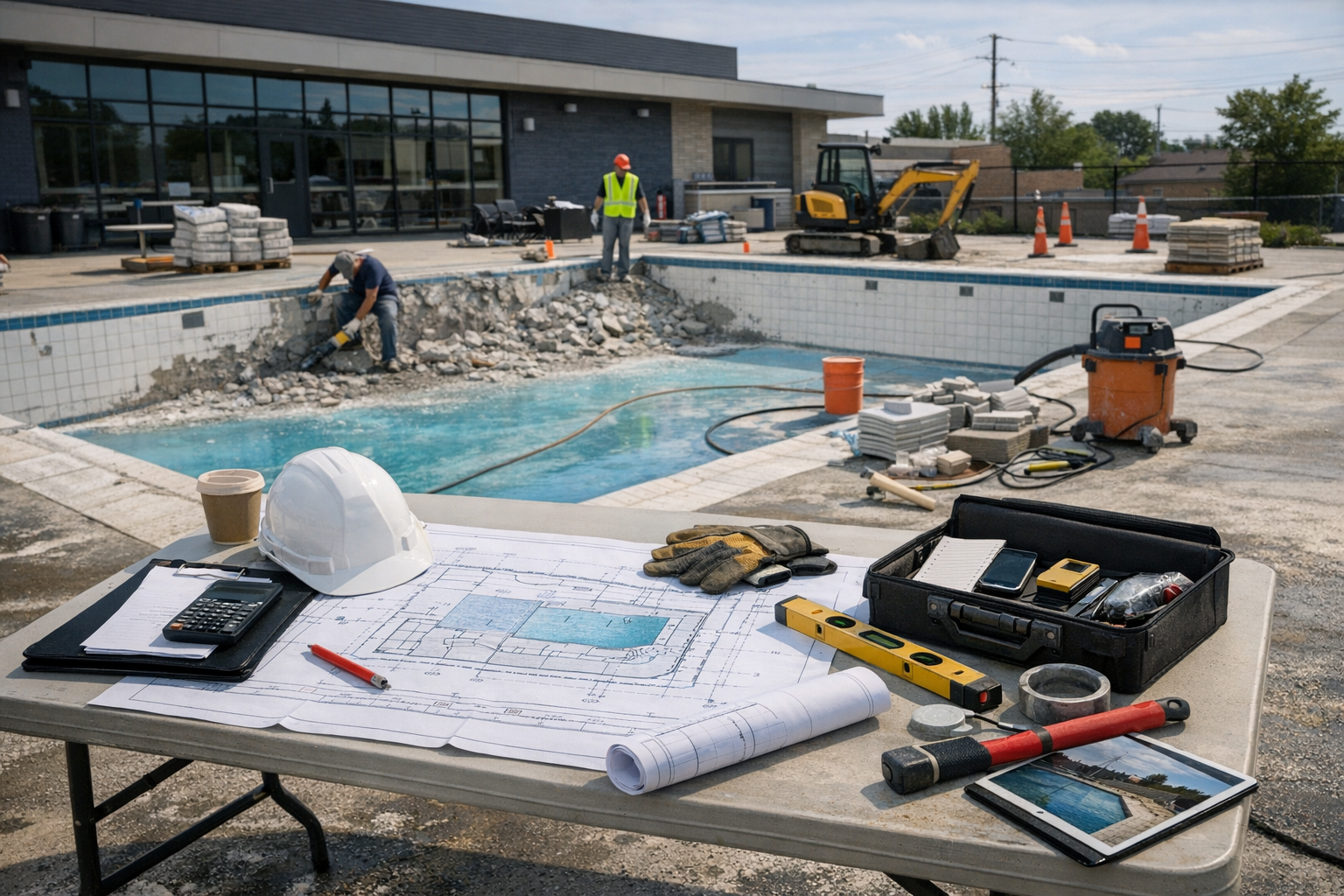
Why This Matters
Commercial pool renovations fail early when planning starts too late or stays too shallow. An aging pool can hide structural wear, buried plumbing issues, and code gaps that only show up after demolition begins. In Southern Ontario, seasonal operating windows and contractor availability also affect cost and downtime.
Start with a full site assessment
A surface walkthrough is not enough for an older commercial pool. The vessel, deck, drains, piping, equipment room, and barriers all need a coordinated review before scope decisions are made.
Deck conditions matter as much as the pool shell. Cracking, settlement, hollow spots, and poor drainage often point to deeper base failure or water migration. If these signs are missed, a new finish can be installed over a site that continues to move.
Access also affects planning. Hotels, condos, fitness clubs, and municipal sites often have tight equipment routes, shared service corridors, or occupied spaces beside the work zone. Those limits can change demolition methods, staging, and the total schedule.
Define the renovation scope by facility type
Each commercial setting uses its pool differently, so the scope should match actual operating demands. A condo may focus on lifecycle repairs and risk reduction, while a hotel may prioritize appearance and reopening speed.
Fitness clubs usually need circulation performance and water quality reliability. Municipal facilities often face broader compliance reviews, higher bather loads, and more demanding accessibility requirements. Treating every site the same can produce a scope that looks complete on paper but misses the real failure points.
- Hotels often need upgrades timed around occupancy cycles and guest disruption limits.
- Condos may need board approval, resident notice periods, and tighter noise controls.
- Municipal pools often require more formal inspection and procurement steps.
Find structural, plumbing, and circulation deficiencies early
Many budget overruns start with hidden conditions uncovered after work begins. Structural cracks, corroded fittings, leaking lines, and undersized circulation components can turn a finish upgrade into a deeper rehabilitation project.
Circulation problems are easy to underestimate. Poor return placement, outdated suction fittings, or failing valves can lead to uneven turnover and chronic operating issues after the renovation is done. If the system is left partly outdated, the pool may reopen with the same performance complaints it had before shutdown.
Pressure testing, dye testing, and equipment inspection should happen before scope is finalized. That early effort helps separate cosmetic work from repairs that affect safe operation.
Build the budget around scope risk and downtime
Phased upgrades can help when full closure is difficult, but phasing has tradeoffs. Mobilizing multiple times can raise total cost, and temporary tie-ins can create added risk between phases. A practical pool budgeting guide can help owners compare base scope, contingency, and sequencing choices before tendering starts.
Budget forecasting should include both known repairs and probable unknowns. Older commercial pools rarely open cleanly once finishes are removed, so contingency planning is not optional.
Downtime planning should cover more than construction days. Permit review, material lead times, cure periods, inspections, refill, balancing, and staff preparation all affect the real reopening date.
Plan finishes and system upgrades as one package
Finish selection should not be treated as the final decorative step. The coating or interior finish has to match substrate condition, moisture exposure, preparation method, and the expected operating load.
Mechanical upgrades should be aligned with the finish schedule. If piping, fittings, or circulation changes are delayed until after the interior work, rework becomes expensive fast.
If the substrate is unstable or poorly prepared, even a high-grade finish can fail early. Blistering, delamination, and uneven wear often come from planning mistakes made before application day. Many owners reviewing pool coating systems find that the right choice depends as much on shell condition and shutdown length as on appearance.
Schedule around Southern Ontario’s renovation window
Seasonal timing affects demolition, curing, staffing, and reopening targets. In Southern Ontario, many commercial projects compete for the same spring and fall construction windows, which can tighten contractor and material availability.
Cold weather can limit some exterior deck work and slow cure schedules. Summer work may seem attractive, but it often conflicts with peak use periods for hotels and municipal facilities. Waiting too long to book a project can leave owners choosing between a rushed scope and a delayed season.
Set the assessment, scope, and budget early enough to secure trades before the preferred shutdown period. That gives the project a better chance of reopening on schedule, with fewer costly surprises during construction.